Hi all, just found this forum. Just bought a T-Bucket kit car. Probably paid way too much, but want to have fun while I can still enjoy it. Trying to sell my “6” motorcycles. I love them, but getting too wobbly at 76, to ride 2 wheels. My Bucket T needs some tweaks. Bad wobble over 40. Added a few degrees positive camber, helped some. I don’t like the Micky Thompson Sportsman tires on the front. I think they are too hard. 15 psi, and still like hockey pucks! I can sit my 200 lb butt on them, and they don’t even budge. I’m searching for a nice soft 15” car tire. Something that would be OK for cruising 60/70 comfortably. I’ll get r done. Have all the time that God allows.




You are using an out of date browser. It may not display this or other websites correctly.
You should upgrade or use an alternative browser.
You should upgrade or use an alternative browser.
New “Old Fart”
- Thread starter cootertwo
- Start date

RodStRace
Active Member
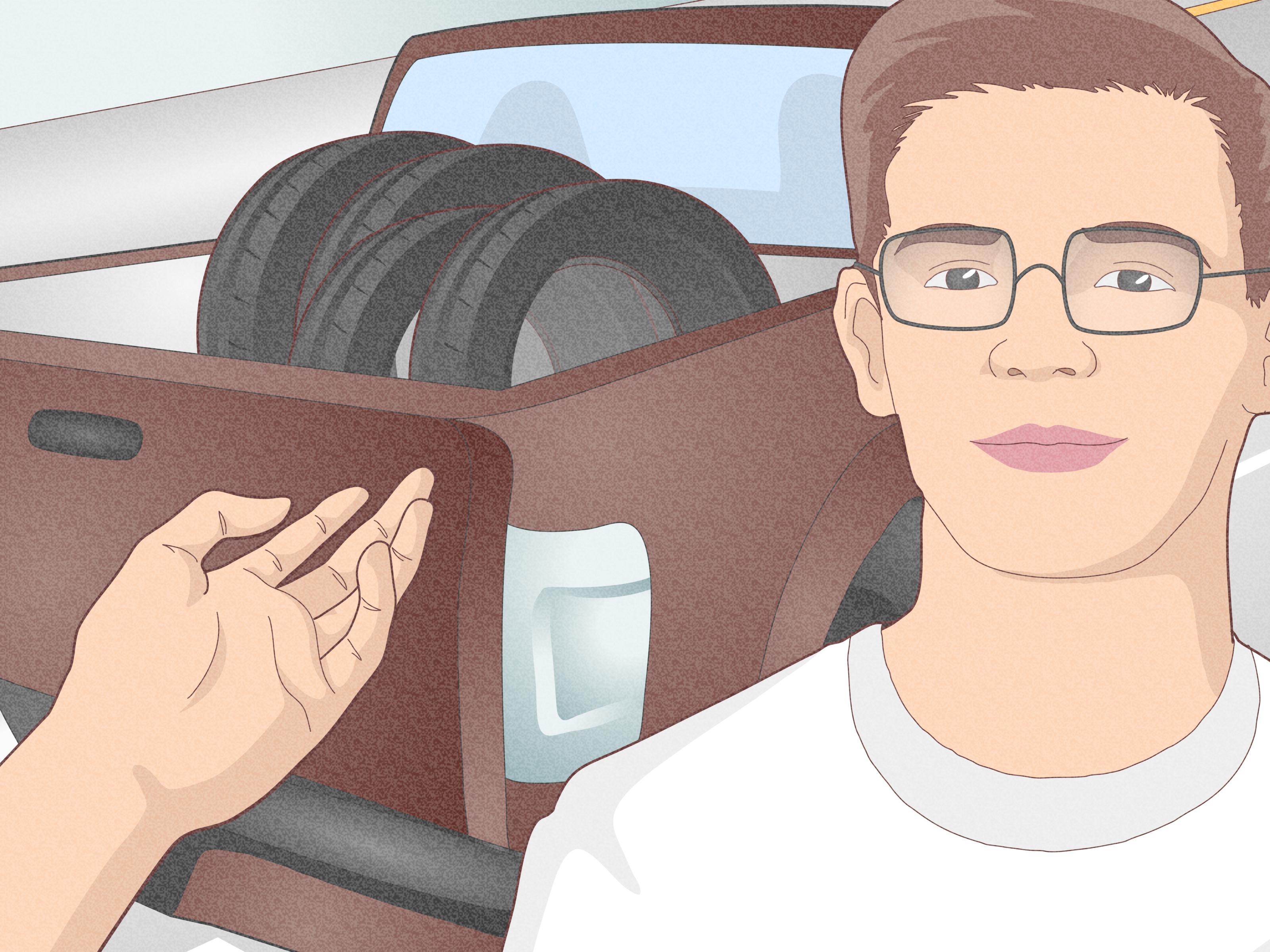
Check the tire dates. Some feel that it's a grand scheme to turn inventory faster, but older tires do get hard.
 www.wikihow.com
Did you add caster (lean back the top of the axle) not camber (top of tire in = bend axle)?
Have someone turn the steering wheel a few degrees in each direction as you check each pivot of the steering for loose play.
How to Tell the Age of a Tire: Reading the Tire Date Code
It's important to know how old your tires are so that your car is safe on the road, but where do you find that information? Telling the age of a tire is a breeze—just locate the Department of Transportation code on the tire's sidewall and...
Did you add caster (lean back the top of the axle) not camber (top of tire in = bend axle)?
Have someone turn the steering wheel a few degrees in each direction as you check each pivot of the steering for loose play.

Welcome, and if you have any questions, please ask away. There is quite a few knowledgeable people that hang around here.

Yes, welcome! Front end wobble is a fairly common problem with these cars, and usually indicates improper alignment settings or excessive wear in front end components.
In the "fun" department, nothing beats these little cars for fun factor - a real blast to drive! As to front tires, radials are the way to go, and 12-15 psi inflation pressures should be enough to give a decent ride.
In the "fun" department, nothing beats these little cars for fun factor - a real blast to drive! As to front tires, radials are the way to go, and 12-15 psi inflation pressures should be enough to give a decent ride.


Wynzwrld
New Member
Here’s a video I found on my car from before I bought it. He talks about the death wobble and how they fixed it with a stabilizer shock. I have had the car up to 80 mph on the freeway and no wobble at all. Regarding the tires, mine are a bit bumpy running 15-18 psi.
Shakedown ride
Shakedown ride


Hi all, just an up-date as of 12/5..... yup as I thought, and was suggested, the mfg date of the front tires is 2014, and they are hard as a rock. Look nice, but that's all. Bought new steel wheels, and 4 new tires. Going to a 33X12.5X15 on the rear. Can't remember the front? All mounted, just have to put them on. NOT balanced. Want to run them in a little, then I have balance beads, if needed. REALLY want to sell these 4 Weld wheels and MT tires.
Also having a time with the hydraulic clutch setup. Arthritis has me crippled up for a few days, so not much work going on.
Also having a time with the hydraulic clutch setup. Arthritis has me crippled up for a few days, so not much work going on.
RodStRace
Active Member
Is it a hydraulic slave cylinder pushing on the fork or a Hyd throwout bearing?
Clutch masters are a bit different than brake master cylinders, in that they are sized to provide no additional 'throw' for safety.
A brake pedal can be 'pumped up' to get more fluid displaced and bled easier. A clutch master only provides the exact amount of displacement to operate the clutch. This makes them more difficult to bleed. Vacuum bleeding and reverse pressurizing the circuit are commonly suggested for these, especially Hyd. throwout style.
I did a search for a good article, but most were garbage. Most did not even mention anything but gravity or 2 person bleeding. A lot had pictures of bleeding brakes! I would not bother with 'articles' about this unless they talk about the systems at a higher than 3rd grade level and mention the different types and show actual clutch parts!
This forum discussion at least talks about the common issues and fixes.

 www.camaros.net
I will also mention something else that might be an issue for your exact vehicle. Normally, hyd clutches have the master cylinder up on the firewall, actuated by a hanging pedal. This allows the air to seek the highest point by going up the hoses and lines to the master and rising from the master to the reservoir, out of the pressurized part of the system. Since your T-Bucket has a flat, empty firewall, the master is under the floor.
This often places the master cylinder below the slave cylinder, causing any air to rise to the highest point, which would be the slave cylinder which is part of the pressurized part of the system. That should allow a fairly quick easy bleed, IF the bleeder is at the highest point of the slave cylinder, but just be aware of this. On underfloor brake systems, they have residual valves to hold a small amount of pressure in the lines and cylinder/caliper to prevent air from seeping into the high points. This can be done because the parts are designed to handle this. Clutches may or may not be able to handle having residual pressure. The throwout bearing must be able to retract enough to clear the clutch. Otherwise, it will constantly spin, drastically shortening it's life.
You mentioned that you have been a mechanic most of your life. You may know some or all of this. However, if someone else happens to have this same issue, I hope they search and find this. If it helps you, even better!
Clutch masters are a bit different than brake master cylinders, in that they are sized to provide no additional 'throw' for safety.
A brake pedal can be 'pumped up' to get more fluid displaced and bled easier. A clutch master only provides the exact amount of displacement to operate the clutch. This makes them more difficult to bleed. Vacuum bleeding and reverse pressurizing the circuit are commonly suggested for these, especially Hyd. throwout style.
I did a search for a good article, but most were garbage. Most did not even mention anything but gravity or 2 person bleeding. A lot had pictures of bleeding brakes! I would not bother with 'articles' about this unless they talk about the systems at a higher than 3rd grade level and mention the different types and show actual clutch parts!
This forum discussion at least talks about the common issues and fixes.
Bleeding Hyd Clutch system, how?
Is there any way around removing everything and bench bleeding the hyd clutch master? I've gravity bled the system and have a good stream coming out of the t/o bearing bleeder line but I can't get any pedal resistance, none at all. Yes the bleeder line is on top.
I will also mention something else that might be an issue for your exact vehicle. Normally, hyd clutches have the master cylinder up on the firewall, actuated by a hanging pedal. This allows the air to seek the highest point by going up the hoses and lines to the master and rising from the master to the reservoir, out of the pressurized part of the system. Since your T-Bucket has a flat, empty firewall, the master is under the floor.
This often places the master cylinder below the slave cylinder, causing any air to rise to the highest point, which would be the slave cylinder which is part of the pressurized part of the system. That should allow a fairly quick easy bleed, IF the bleeder is at the highest point of the slave cylinder, but just be aware of this. On underfloor brake systems, they have residual valves to hold a small amount of pressure in the lines and cylinder/caliper to prevent air from seeping into the high points. This can be done because the parts are designed to handle this. Clutches may or may not be able to handle having residual pressure. The throwout bearing must be able to retract enough to clear the clutch. Otherwise, it will constantly spin, drastically shortening it's life.
You mentioned that you have been a mechanic most of your life. You may know some or all of this. However, if someone else happens to have this same issue, I hope they search and find this. If it helps you, even better!
Thanks for the reply. Yup, it's an outside the bell housing setup. I tried to bleed it some by gravity. Problem now, is I cannot see how far the clutch lever is moving at the bell housing. "FEELS" like it should be disengaging, but cannot shift into anything without grinding. I'll get back on it when I feel better. "Gettin old ain't for sissy's"
RodStRace
Active Member
Since it is a separate slave, you might try this if you are up to it and how much access you have.
Disconnect it from the bellhousing and let it hang down by the hose under the car. This should drop it under the level of the master. It might just bleed the air up and into the reservoir. Just don't forget that it's off!
Disconnect it from the bellhousing and let it hang down by the hose under the car. This should drop it under the level of the master. It might just bleed the air up and into the reservoir. Just don't forget that it's off!
RodStRace
Active Member
As for movement, if you don't have another set of eyes, zip ties might bear witness.
Hook one up to the clutch fork and have it trail back past the slave. Have another zip tie around something stationary (slave cylinder?) and lightly holding the tail of the one on the fork. Go up and push on the pedal. The tail should be pulled out showing how much the fork moved.
Kind of the same thing as having one around a shock stem showing how much compression you are getting.
Hook one up to the clutch fork and have it trail back past the slave. Have another zip tie around something stationary (slave cylinder?) and lightly holding the tail of the one on the fork. Go up and push on the pedal. The tail should be pulled out showing how much the fork moved.
Kind of the same thing as having one around a shock stem showing how much compression you are getting.
Similar threads

- Replies
- 0
- Views
- 870