Garage Merch                Ron Pope Motorsports                California Custom Roadsters               

Where can i find these

kwblue98

New Member
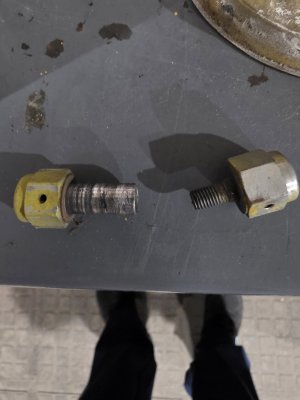
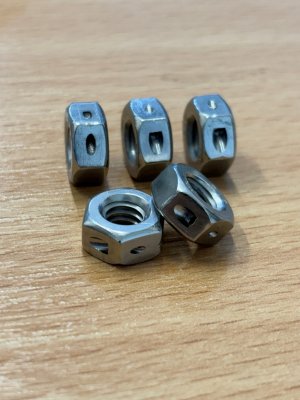
I just got my hands on a 98 TP 23. And im doing a much needed revamping and chroming when I came across these clevis bolts can't seem to find anywhere. Tried fastenal..napa..all auto parts stores
 

Attachments

  • 1000003546.jpg
    1000003546.jpg
    695.7 KB · Views: 15
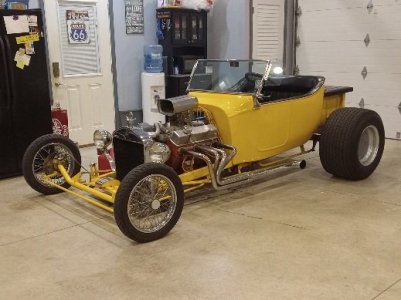
Welcome to the family. We have two sponsors of this site that could probably help: RPM and CCR (see banner at top of page). I'd love to know what car these came from. Any pics?
 
Those appear to be a rather special unique fastener made for that application.
Normally, it would be a bolt with a shank to support the clevis and bracket, then threads for the nut.
That looks like an acorn nut on each side with half being a shank drilled and tapped for the smaller threaded other half.
If the originals won't handle your refinishing, I'd consider having a machine shop make a stud with a central shank and threads at each end. Notice that the Acorn nuts have holes. I think those are an indication of a locking nut.
 
Actually, those holes do not appear to be Safety wire holes.
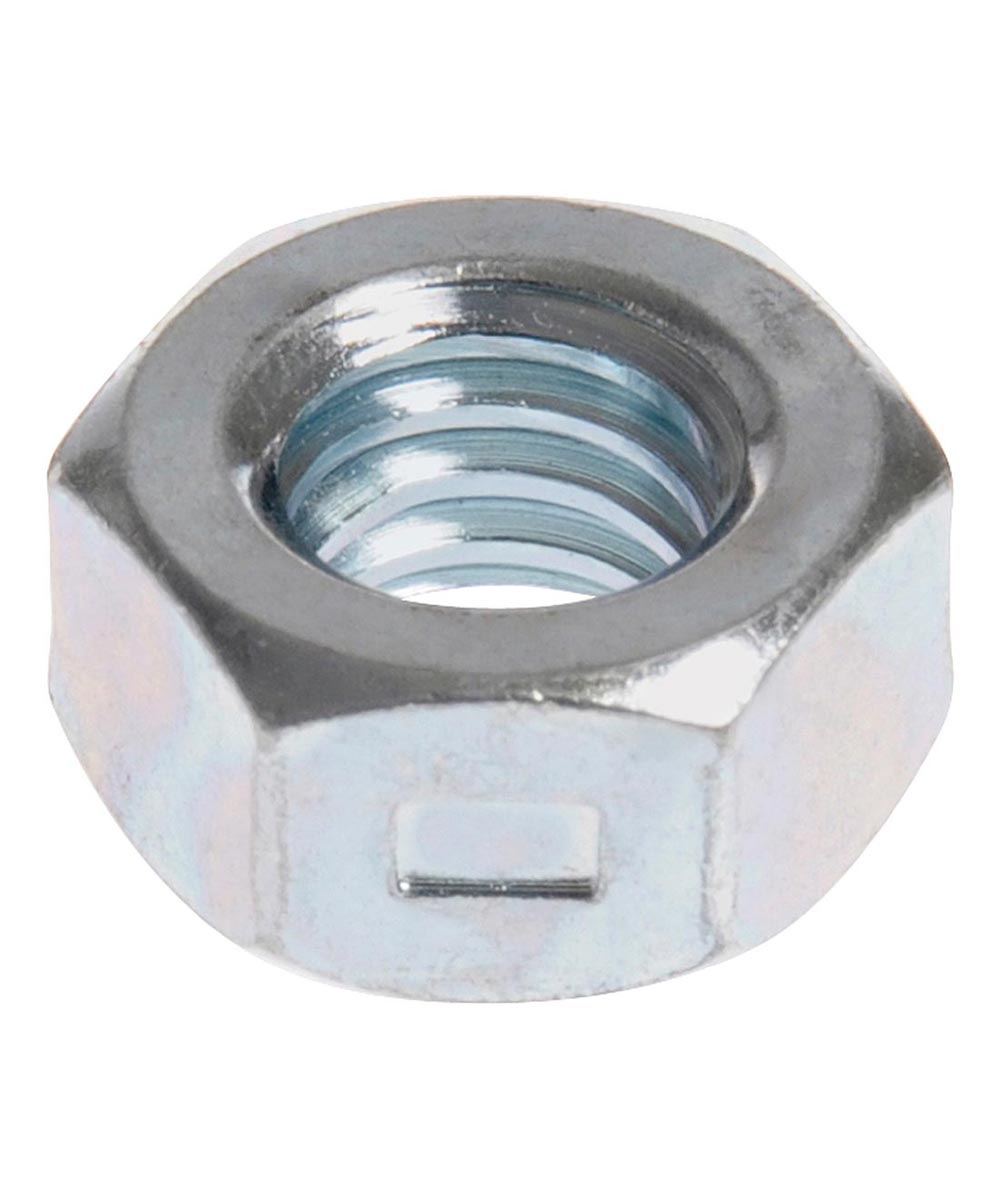
Various nut types.
Typically a nut has a hole through one point of the corner, not straight thru the middle. A straight shot nut would normally be castellated.
image-scaled.jpeg
To use that hole as a safety wire hole, the nut and inner fastener would need to be torqued to proper spec and have a hole drilled to match. It could not have more than one hole or a slot, because that would weaken the inner fastener. In this case, the thicker tubing on one side and the small threaded stud on the other. As you might imagine, this is not a process that is easily repeatable in production. That's why a castellated nut is normally the answer along with a cotter pin. Safety wire is to hold the part in place by pulling in the direction of tightening, not a simple thru hole like a cotter pin. The diameter of the pin compared to the wire shows it must be larger to counter the shearing of unthreading the parts.

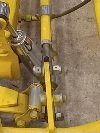
In this exact case, the decorative design has been chosen over 'standard' fasteners. You won't see an acorn nut on both ends except in something like this. As you can see, the threaded portion holding this together and tight is much smaller than the normal sized holes in the bracket and clevis. The shouldered area is subject to the forces from the bracket and clevis. The smaller threaded area is just to hold the shouldered part in place.
 
Last edited:
I will also mention that I am NOT an engineer. I have no formal education in material or fastener strength. I am not claiming this is a bad design in any way.
However, I would question having a clevis and bracket that have an internal diameter that is commonly used in this application which is secured by a hollow tube of this diameter and torqued by a much smaller threaded fastener in the middle of that tube. Almost all forces are across this diameter, not along it's length. In tension, the tube and fastener provide the same diameter as a solid rod. History shows that it has withstood the forces and is capable of supporting the loads. I would still have more peace of mind having a solid part, not a tube with a threaded inner part.
If it is important to you that this has the design looks as shown (acorn nut on each end) I would consider having the center stud machined with a shoulder the width of the clevis and use a locking acorn nut on each end.
 

     Ron Pope Motorsports                Advertise with Us!     
Back
Top